
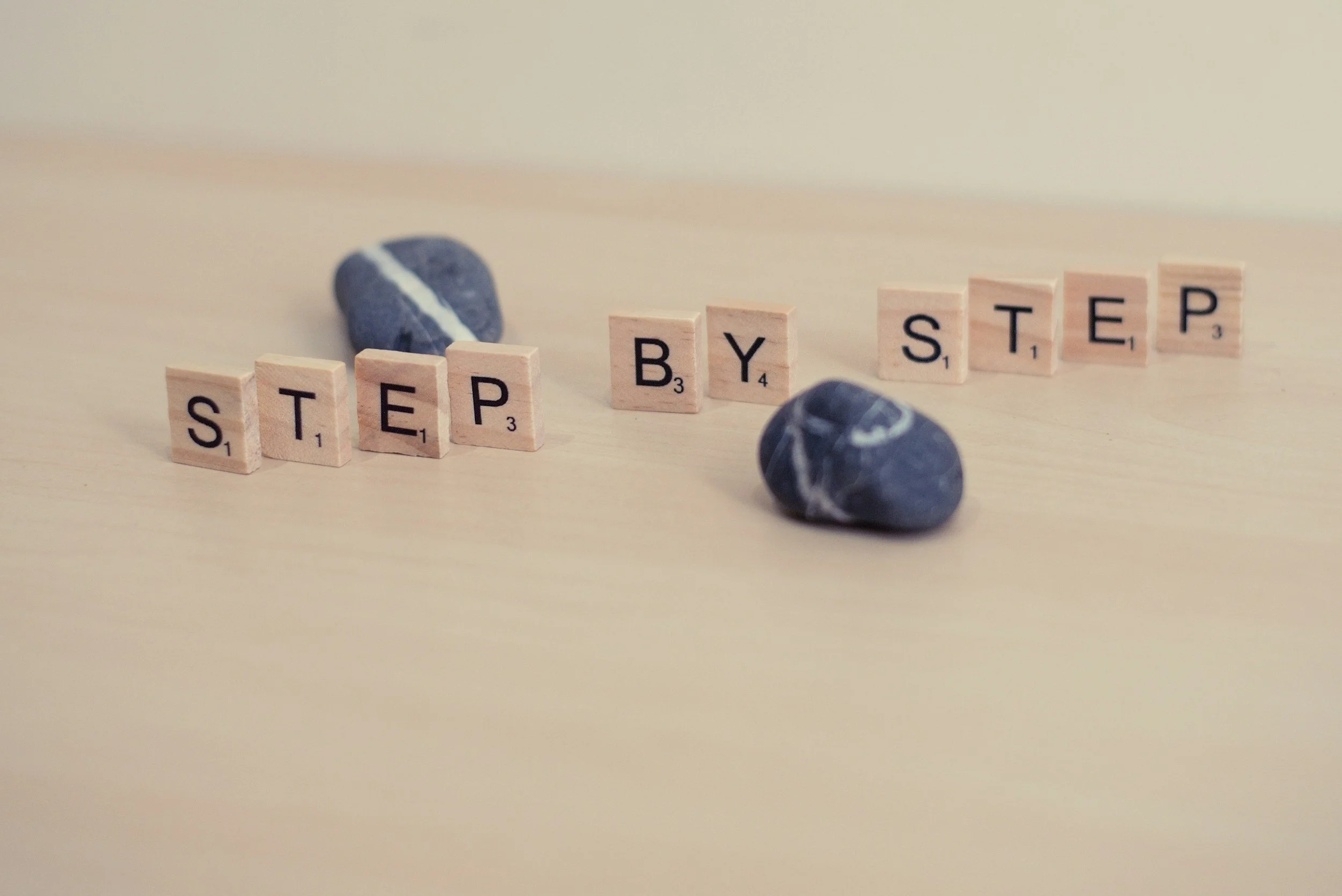
Staying Continual and Consistent
A Course Doesn't End — It Just Hands You Something to Carry
Here's something worth sitting with for a minute: courses end, but hearts don't.
Over these past weeks, you've done something beautiful. You've looked honestly at your identity, at the fruit of the Spirit growing (or not yet growing) in you, at your purpose and calling, at everything God has already done on your behalf. That's not small work. That's soul work. And soul work doesn't come with a finish line the way a class does.
So today isn't really a wrap-up lesson. It's more like a gift you get to open on your way out the door — a way of carrying everything you've learned into the rest of your life, instead of setting it down the moment the syllabus is finished.
Think about it this way: nobody says, "I ate well this month, so I'm done eating well forever." We instinctively know that health is something we return to, meal after meal, day after day. Your walk with God works the same beautiful, ongoing way. You're not "arriving" and you're not supposed to. You get to keep walking, keep looking, keep growing — for the rest of your life, and that's genuinely good news.
This isn't meant to feel heavy. It's meant to feel free. Because once you let go of the idea that there's a single finish line, you stop being blindsided when an old struggle shows up again wearing a new outfit. Staying continual was never about never stopping the walk — and there's so much grace in that.
Why This Matters: A Life, Not a Lesson
Scripture invites us into a rhythm, not a single moment
David didn't pray "search me" once and check it off his list. Psalm 139 reads like a man in an ongoing, honest conversation with God — someone who keeps returning to the same open-hearted posture, over and over. He prays, "Search me, O God, and know my heart! Try me and know my thoughts!" (Psalm 139:23, ESV). That's not a one-time confession. It's an invitation David kept extending across a lifetime of walking with God — and it's an invitation open to you too, today and every day after.
Lamentations 3:40 says it beautifully: "Let us test and examine our ways, and return to the LORD!" (ESV). Notice the "let us" — it's shared, ongoing, communal. Not a one-time event, but a practice we get to keep returning to together.
And Paul tells the believers in Corinth to "examine yourselves, to see whether you are in the faith" (2 Corinthians 13:5, ESV) — present tense, habitual, woven into ordinary life. This isn't a spiritual trick you use once for a big payoff. It's simply what it looks like to walk with God honestly, for the long haul, all the way home.
We drift — and that's okay, as long as we notice
Nobody wakes up and decides, "Today I'll become bitter" or "Today I'll go numb toward God." It happens a degree at a time, the same way a ship just a few degrees off course can end up hundreds of miles from where it meant to go — not because of one dramatic turn, but because nobody checked the compass for a while.
That's grace-filled news, actually: it means drift is catchable. The whole point of looking inward isn't to catch yourself doing something wrong — it's to notice, gently and early, "Oh, I've drifted a little," while it's still a small course correction instead of a crisis. Self-examination isn't a scorecard. It's simply your instrument panel, and instrument panels exist to help you, not to shame you.
Growth spirals upward — it doesn't march in a straight line
The exact struggle you worked through weeks ago might quietly resurface in six months, wearing a different costume. Maybe it showed up back then as jealousy toward a coworker; maybe next spring it shows up as quiet resentment toward someone you love. Same root, new branch — and that's not failure. That's simply how growing in Christ works. It's less like climbing a staircase you finish once, and more like walking a spiral staircase that circles back to familiar territory, but just a little higher up each time you pass it.
Paul talks about "working out your own salvation with fear and trembling" (Philippians 2:12, ESV) — and "working out" was never a one-time transaction. It's ongoing, unfolding, daily labor. The habit of gently looking inward is exactly what lets you recognize an old pattern the moment it tries on new clothes, instead of being caught off guard by it years down the road.
The Two Ditches — And the Road Between Them
There are two easy traps on either side of this road, and both of them will try to convince you they're the safer path.
Neglect is the ditch where we simply stop looking inward — life gets busy, the course ends, the initial spark fades, and nobody's checking the instrument panel anymore. Drift happens quietly here, almost invisibly.
Obsession is the opposite ditch — where looking inward curdles into anxious self-scrutiny, constant guilt, and a restless inability to simply rest in grace. This isn't real examination anymore; it's a kind of exhausting, works-based performance that completely misses the heart of the thing.
Here's the truth that keeps you on the road between them: healthy self-examination always happens inside grace, never outside of it, and never as a substitute for it. It's never "let me dig until I find enough wrong with myself to feel appropriately sorry today." It's "let me see myself clearly, so I can keep walking honestly with the God who already sees me completely — and already loves me completely."
First John 1:9 is the safety net underneath all of this: "If we confess our sins, he is faithful and just to forgive us our sins and to cleanse us from all unrighteousness" (ESV). Confession leads to cleansing, never to condemnation. Not once, not ever.
Building the Rhythm: Small, Doable, Sustainable
This is the heart of today — not just convincing you this matters, but giving you something real to actually build into your life.
Daily — a few honest minutes. The ancient "Examen" prayer works beautifully here. At the end of the day, ask God two simple questions: Where did I sense You today? and Where did I resist You today? You're not writing a dissertation. Five honest minutes — maybe with a journal, maybe just in the quiet before sleep — is enough to keep your heart soft and aware.
Weekly — a slightly longer look back. Set aside fifteen or twenty minutes, maybe Sunday evening or Friday morning, and zoom out a little further than a single day. What patterns am I noticing this week? Where did I react instead of respond? Is there anything I've been quietly avoiding? A week gives you enough distance to see trends a single day can't reveal.
Monthly or seasonally — invite someone else in. This is where community becomes essential, because self-examination done entirely alone can go blind on itself — we all have blind spots we simply can't see without another set of eyes. Bring a trusted friend, spouse, mentor, or small group into it. Ask them directly, "What have you noticed in me lately?" Proverbs 27:17 says it plainly: "Iron sharpens iron, and one man sharpens another" (ESV). That's not just a nice sentiment — it's a reminder that we genuinely need each other.
Yearly — a bigger, unhurried review. Once a year — maybe near a birthday, a New Year, or the anniversary of coming to faith — carve out a longer stretch of time to look at the bigger arc of your life. Where has God grown me this year? What's the same recurring struggle, and what's genuinely new? What would it look like to bring that honestly before Him again, right now? This yearly rhythm keeps you from losing the forest for the trees.
The Grace That Makes It All Sustainable
None of this works if it's powered by willpower alone. If continual self-examination becomes one more performance metric — one more box to check to feel like a "good enough" Christian — it will collapse under its own weight within a month. Guaranteed. The only reason we can keep looking inward, even at the hard and disappointing parts, is that we're not doing it in order to be accepted. We're doing it because we already, fully, permanently are.
Hebrews 4:16 says it beautifully: "Let us then with confidence draw near to the throne of grace, that we may receive mercy and find grace to help in time of need" (ESV). Confidence — not dread. Mercy — not a scorecard. That posture is what makes a lifetime of looking inward feel sustainable instead of exhausting, life-giving instead of draining.
This is a practice for the free, not for the fearful. You're not examining your heart to find out if you're loved. You're examining your heart because you already are — completely, permanently, right now.
One Last Thing
Before you close this course out, do just one thing: pick a single rhythm from today's lesson and make it real. Not someday. Today. An actual time, on an actual calendar.
That one small decision is often the quiet difference between a course that shaped a season of your life — and a practice that shapes the rest of it.
Take Action:
Pick your daily rhythm right now. Choose a specific time tonight — before bed, during a commute, over morning coffee — and commit to the two-question Examen: Where did I sense God today? Where did I resist Him?
Put a weekly check-in on your actual calendar. Not "I'll try to remember" — a real day and time, fifteen to twenty minutes, this week, to ask what patterns you're noticing.
Name one person for monthly accountability. Reach out today and ask someone you trust if they'd be willing to periodically tell you what they notice in you — even the hard things.
Schedule your yearly review. Pick a date already meaningful to you — a birthday, New Year's Day, your faith anniversary — and block out an afternoon for a bigger-picture look at your walk with God.
Write down one recurring struggle you've noticed resurfacing. Don't judge it — just name it honestly. Bring it to God today with the confidence of Hebrews 4:16, trusting Him to meet you there again, exactly as he did the first time.
The Conversation:
"What do you think it looks like for someone to actually keep this up long-term — not just during a course like this, but years from now?"
"Why do you think it's so easy for people to mean well and still drift without noticing?"
"If you were designing a rhythm for looking inward — daily, weekly, whatever — what would you build in, and what would you leave out?"
"What's the difference between healthy self-reflection and just beating yourself up? How would you know which one you're doing?"
"Do you think most people need someone else in this process with them, or can it really be done alone? Why?"